Employers Want AI Skills. How Colleges and Companies Can Keep Up.
Employers want more workers with AI skills. Half of college students are not building these skills and current employees in the workforce keeping up either. However, colleges and training programs can help close this gap, and the data points to where they should begin.
Written by: Dr. Donnie Grimes Connect on LinkedIn
Employers Are Moving Faster Than Students
A 2026 survey by the National Association of Colleges and Employers (NACE) found that over one-third of entry-level jobs now require AI skills, nearly three times as many as six months earlier. Nearly 60% of employers now give interns projects that use AI tools.
Yet many students have not recognized how quickly those expectations are changing. In NACE’s 2026 Student Survey of over 17,000 students at 258 colleges, only 40% said AI skills are very important for their careers. Half of the students (50.5%) are not building AI skills.
Research from individual campuses reinforces how quickly AI expectations are changing. At American University’s Kogod School of Business, a three-year study found that employers asking students about AI skills rose from 11.6% in 2024 to 42.6% in 2026.
This does not mean students are not ambitious. Many just have not heard what employers want, or they are unsure how AI fits into their field. AI skills go beyond knowing how to write a prompt. They include understanding when to use AI, evaluating its results, protecting sensitive information, and applying the technology appropriately to professional tasks. Colleges can help students understand and develop these skills.
The AI Training Gap Extends to Current Workers
The same gap exists in the workforce. Employers who want new graduates with AI skills also have current employees who need them, but most workers have not had employer AI training in the past six months.
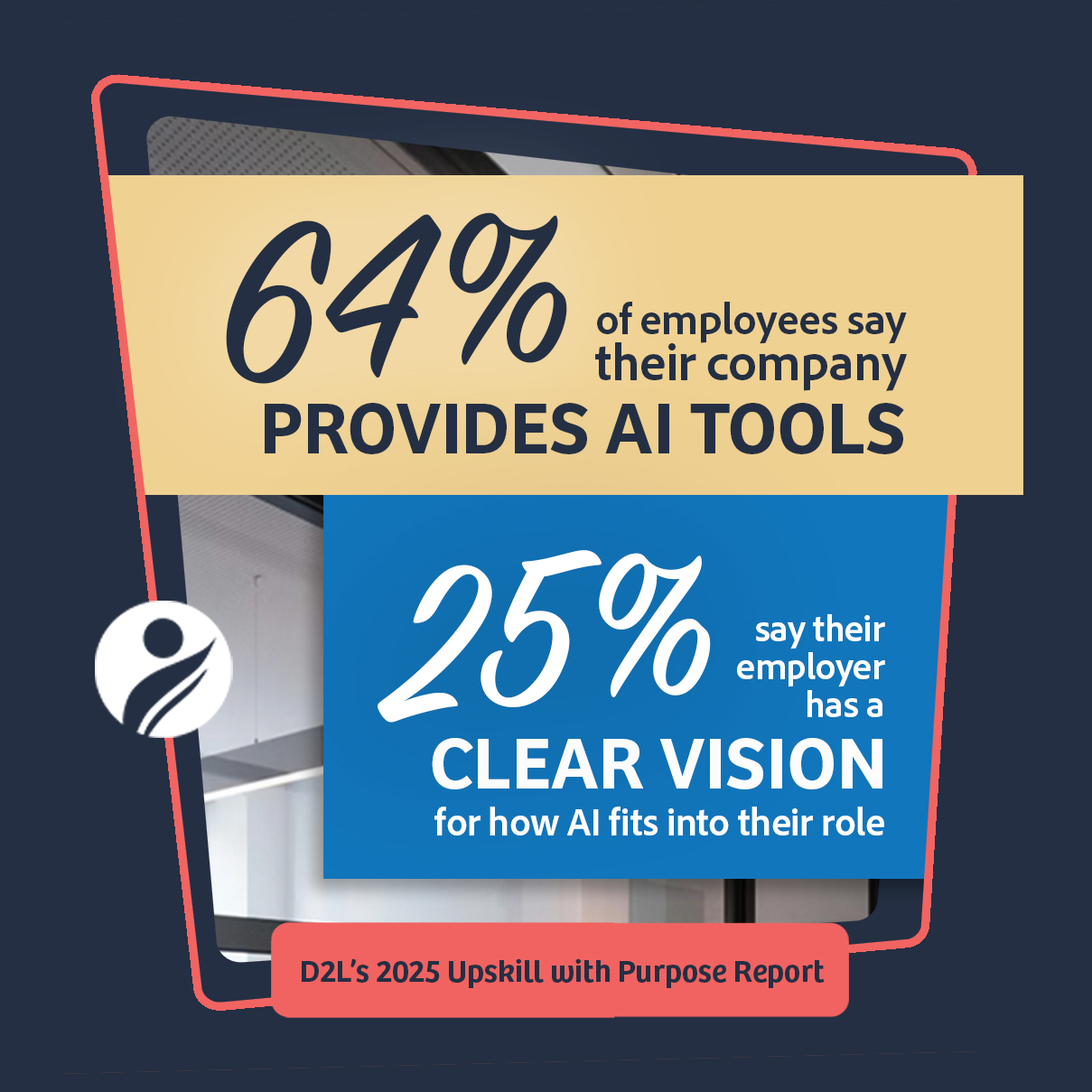
The Conference Board surveyed almost 1,300 workers and found that 55% use generative AI or AI agents daily or weekly. Only 33% joined employer-provided AI training in the past six months, and 28% say their organization does not offer any AI training. Less than half say they have enough time (48%) or enough tools and resources (48%) to build AI skills at work.
Employers are aware of this issue. In the World Economic Forum’s Future of Jobs Report 2025, 85% said they plan to focus on upskilling their workforce. But the Conference Board data shows that these plans have not reached most workers yet.
What We Are Seeing in Practice
I see both of these gaps firsthand. At the University of the Cumberlands, we help students prepare for the jobs listed in NACE postings. At the Center for Professional Development, our non-degree workforce training group trains people already working in those jobs, usually through short courses lasting weeks, not semesters.
The adults in these courses do not ask about credit hours. They want to learn how to use the new tools their employer introduced and how to check their work.
This connection between degree education and short-term workforce training creates an opportunity for colleges. The same knowledge and expertise that help students prepare for their careers can also help current employees adapt as their jobs change. Colleges that offer both can support learners before graduation and throughout their working lives.
What Colleges Can Do
Share what employers are looking for.
Show students real job postings and employer survey data during advising, orientation, and first-year classes.
Teach AI within each field.
Nursing, business, education, and criminal justice students all need AI examples relevant to their professions.
Include hands-on practice in classes.
Give students projects that involve using AI tools, reviewing the results, and explaining their choices.
Combine AI with lasting skills.
Communication, critical thinking, and good judgment help make AI results useful and reliable.
Work with employers.
Ask hiring managers to review assignments and let faculty know which AI skills are most important in their workplaces.
What Employers Can Do
Train your current employees.
Your existing staff also needs the skills you want in new hires. Give them time to learn, not just access to tools.
Go beyond basic prompting.
The Conference Board found that many companies stop training at AI literacy and simple prompting, instead of teaching workflow redesign or how to manage AI agents. Focus training on real work tasks.
Choose short, targeted courses.
Request training that covers the specific AI workflow your team uses, not just general AI basics.
Measure whether employees can apply what they learn.
Look beyond course completion and ask whether training helps employees improve real work processes, evaluate AI-generated results, and use new tools with greater confidence.
Work with a college that offers both options.
Faculty who teach AI in nursing or business degree programs can also create short courses for current staff, and those credentials can later count toward a degree. Connecting degree programs with short-term workforce training gives employers access to relevant expertise while creating additional educational opportunities for employees.
Preparing the Entire Workforce
AI skills are becoming part of career readiness and everyday work. Colleges and employers have an opportunity to connect what students learn before graduation with the training employees need throughout their careers. Together, they can help prepare the entire workforce for an AI-enabled future.
How is your college or company helping students and employees learn the AI skills employers want? I would like to hear what is working for you.
> Read Article: Who’s Going to Train the 59% of Workers Needing New Skills by 2030?
Sources
- NACE, “Ready or Reluctant? Employer Expectations for AI Skills Meet Student Skepticism” (Job Outlook 2026 Spring Update, 185 employers, surveyed Feb. 12 to Mar. 17, 2026; 2026 NACE Student Survey, 17,000+ students, 258 institutions), July 22, 2026: https://naceweb.org/about-us/press/2026/ready-or-reluctant-employer-expectations-for-ai-skills-meet-student-skepticism
- Poets & Quants for Undergrads, “AI Skills Aren’t A Bonus Anymore” (AI at Kogod: A Three-Year Student Research Report, American University), Aug. 4, 2026: https://poetsandquantsforundergrads.com/news/ai-skills-arent-a-bonus-anymore-new-data-shows-theyre-the-price-of-entry/
- The Conference Board, “Most Organizations Are Preparing Workers for Today’s AI, Not Tomorrow’s Jobs”: https://www.conference-board.org/press/ai-skilling
- World Economic Forum, Future of Jobs Report 2025: https://www.weforum.org/publications/the-future-of-jobs-report-2025/