When Was Your Company’s Last Skills Checkup?
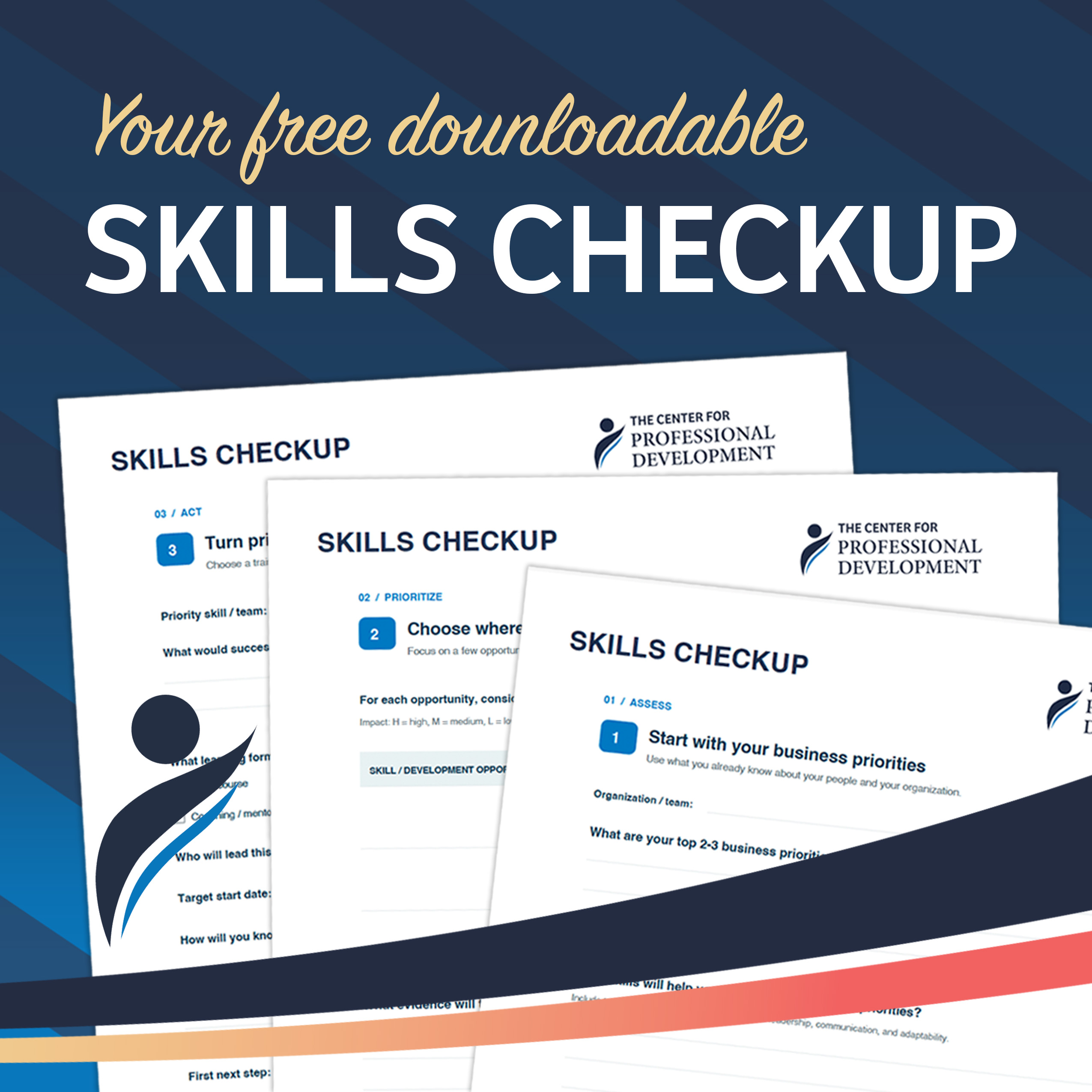
Download our free Skills Checkup worksheet!
You know the areas where your team excels and where there’s room to grow. As technology advances, responsibilities expand, and customer expectations shift, the skills that helped your organization succeed five years ago may need updating to meet today’s demands. A regular skills checkup provides an opportunity to connect what you already know about your workforce with the skills your business will need moving forward.
Business Needs Are Changing, and So Are Skills
As Dr. Lois McWhorter at The Center for Professional Development points out, businesses adopt new technology, expand operations, and respond to changing customer expectations. Employees are being asked to work differently, take on greater responsibilities, and develop capabilities that extend beyond their original roles. Keeping their skills aligned with these demands has a direct impact on productivity, service quality, and the organization’s ability to grow.
Consider an experienced employee moving into a supervisory role, a team adapting to new technology, or department leaders working to improve communication and collaboration. Each situation presents an opportunity to strengthen performance through targeted development, whether that means building technical expertise, improving problem-solving, or preparing employees to lead others.
For business leaders, the value of professional development comes from connecting these opportunities to larger organizational goals. When training is guided by business priorities and the knowledge managers already have of their teams, it becomes a strategic investment in both employee growth and long-term organizational success.
Turn What You Know Into a Training Plan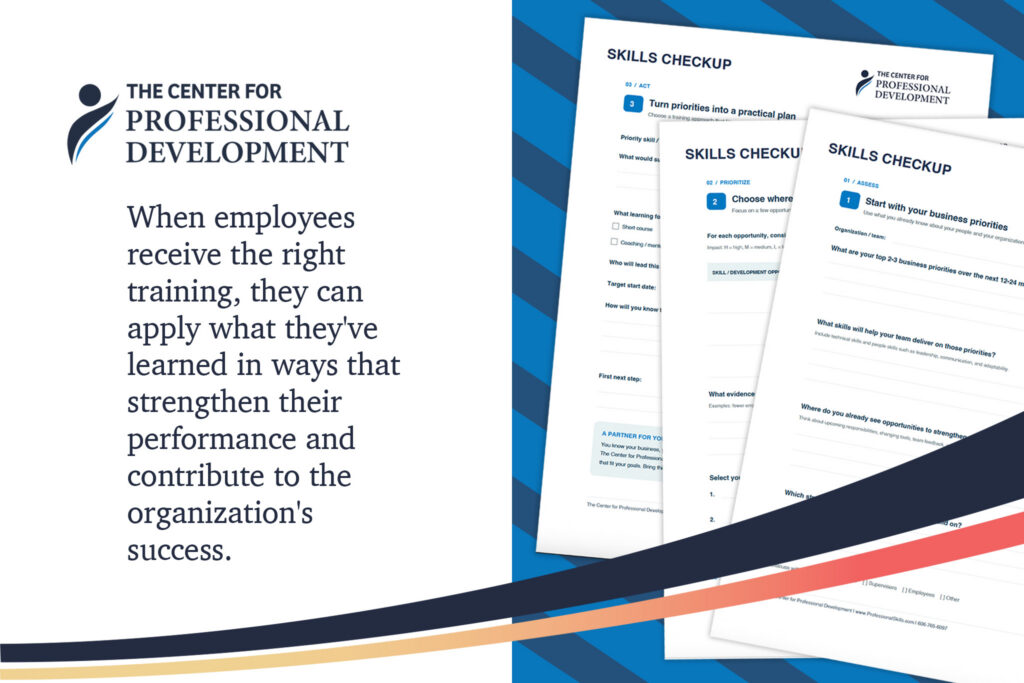
A skills checkup brings together your leadership team’s knowledge of your workforce, business priorities, and development opportunities to identify where training could make the greatest difference. We’ve developed a practical Skills Checkup Worksheet around three steps to help guide that process: Assess, Prioritize, and Act.
- ASSESS your team’s development opportunities.
Start with where your business is headed and the skills your employees will need to support those goals. Build on the insights of your managers and department leaders, considering both technical expertise and professional skills such as leadership, communication, and problem-solving. - PRIORITIZE what will make the greatest impact.
Focus on the skills that most directly support your business objectives, improve performance, or prepare employees for new responsibilities. Prioritizing these opportunities helps direct your time and resources toward development that can make a meaningful difference. - ACT with a practical training plan.
Once you’ve identified your priorities, consider the training options that best fit your organization. Whether that’s a short course, certificate program, or customized team training, establish clear goals and determine how employees will apply what they’ve learned on the job. The value of your training investment becomes evident through stronger employee performance, greater confidence, and continued organizational growth.
Download the free Skills Checkup Worksheet to guide your next leadership discussion and turn your workforce development priorities into an actionable plan.
The Right Training Partner Can Make a Difference
At the Center for Professional Development, we work alongside employers to turn workforce development priorities into practical training solutions that support their business goals. You know your business and your people, and we bring the training expertise to help prepare your team for what’s next. > Learn more about what we offer
Download the Skills Checkup!
Download the Free Skills Checkup Worksheet
Use this practical worksheet to assess your team’s development opportunities, prioritize the skills that matter most, and build an actionable training plan aligned with your organization’s goals. Bring it to your next leadership meeting, and you can share the results with us to explore professional development and customized training opportunities that support your workforce.
Skills Checkup Worksheet